
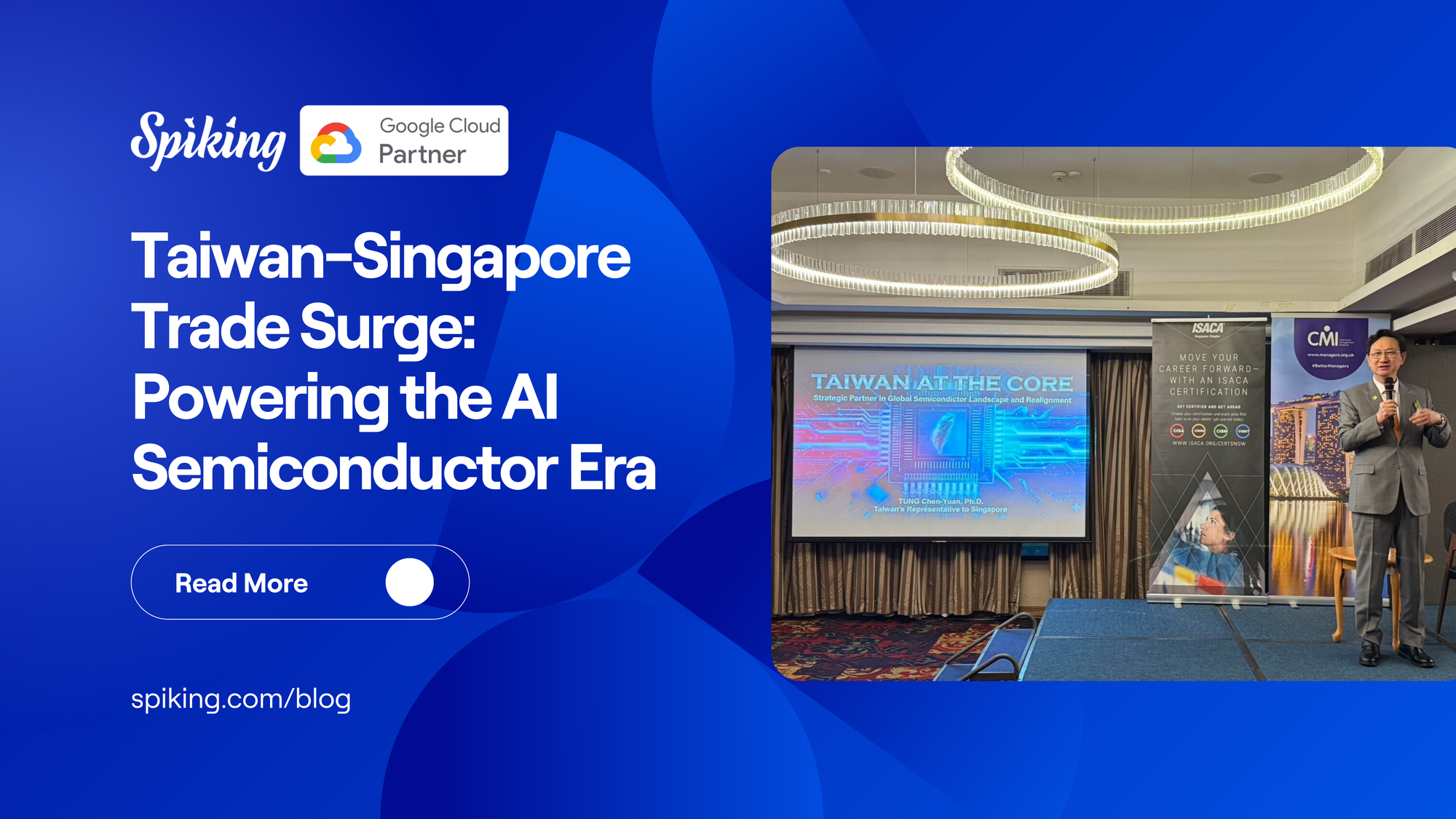
Taiwan-Singapore Trade Surge: Powering the AI Semiconductor Era
Taiwan has emerged as Singapore’s largest trading partner, driven by booming semiconductor and AI-related trade. The shift highlights how technology supply chains are reshaping regional economic partnerships.

Introduction
Taiwan has emerged as Singapore’s largest merchandise trading partner, marking a significant shift in regional trade dynamics.
In 2025, bilateral trade between the two economies reached approximately S$170.4 billion, surpassing trade with traditional partners such as China and Malaysia. The surge has been driven largely by semiconductor supply chains linked to the rapid expansion of artificial intelligence and high-performance computing infrastructure.
In a recent discussion and LinkedIn analysis, Dr. Tung Chen-yuan, Taiwan’s Representative to Singapore, highlighted how the growing semiconductor and advanced electronics ecosystem is strengthening economic integration between the two economies.
This development illustrates how global supply chains are evolving in response to artificial intelligence, high-performance computing, and semiconductor demand. During the discussion, Sir Dr. Clemen Chiang also participated as a Chartered Fellow of the Chartered Management Institute, contributing leadership perspectives on how businesses can navigate structural shifts in technology-driven trade and investment.
Event Overview
The analysis highlights a major transformation in Singapore’s external trade structure. Taiwan surpassed traditional trading partners such as China and Malaysia by total merchandise trade in 2025, driven largely by electronics components and the rapid expansion of AI infrastructure markets.
Trade flows between the two economies increasingly revolve around technology supply chains. Electronics, semiconductors, electronic components, and manufacturing equipment form the core of bilateral trade, reflecting the growing role of both economies within the global AI and high-performance computing ecosystem.
This shift demonstrates how technology demand is reshaping regional economic partnerships while reinforcing Singapore’s role as a strategic hub connecting advanced manufacturing and global capital markets.
Key Insights
The Semiconductor Supply Chain Is Driving Trade Growth
The strongest driver behind the surge is the electronics and semiconductor ecosystem. Trade growth has been supported by strong AI-related demand in electronics and re-export flows linked to Taiwan. This two-way exchange reflects the deep integration of both economies into the global AI and high-performance computing supply chain.
AI and Advanced Computing Are Reshaping Regional Trade
Artificial intelligence infrastructure requires massive computing capacity, advanced chips, and specialised manufacturing equipment. As global AI demand accelerates, trade between Singapore and Taiwan has expanded around these strategic technologies. The rapid growth of electronics exports highlights how AI-related industries are influencing macro trade flows across Asia.
Singapore Role as a Strategic Technology Hub
Singapore’s stable regulatory environment, financial ecosystem, and global connectivity make it an attractive base for technology investment and supply chain coordination. Taiwanese firms increasingly view Singapore as a gateway to ASEAN and global markets, strengthening investment flows and reinforcing long-term economic cooperation between the two economies.
A Structural Shift in Global Supply Chains
The evolving trade relationship reflects broader geopolitical and economic realignments. Companies are diversifying supply chains while positioning themselves closer to innovation hubs and semiconductor ecosystems. Taiwan’s technological leadership and Singapore’s financial and logistics capabilities together create a strategic partnership that supports the next phase of digital and AI-driven growth.
Conclusion
The emergence of Taiwan as Singapore’s largest trading partner signals more than a trade milestone - it reflects the rise of a technology-centric economic partnership built around semiconductors, AI infrastructure, and advanced manufacturing.
For investors and business leaders, the takeaway is clear: the global economy is increasingly organised around technology supply chains.
At Spiking, we study these structural shifts through the lens of capital flows, industry cycles, and technological transformation. Understanding where innovation, trade, and investment intersect allows businesses and investors to position ahead of the next wave of opportunity.
With insights shared alongside leaders such as Sir Dr. Clemen Chiang, the message remains consistent: the future of markets will be shaped not only by capital - but by technology ecosystems and strategic partnerships that power them.


