Move Fast and Bend Things: Lessons from Microsoft
What a lunch with Microsoft's Asia startup team taught Dr. Clemen Chiang about the people behind the products.

Table of Contents
Microsoft Invited Dr. Clemen Chiang to Lunch. Four Executives Turned Up.
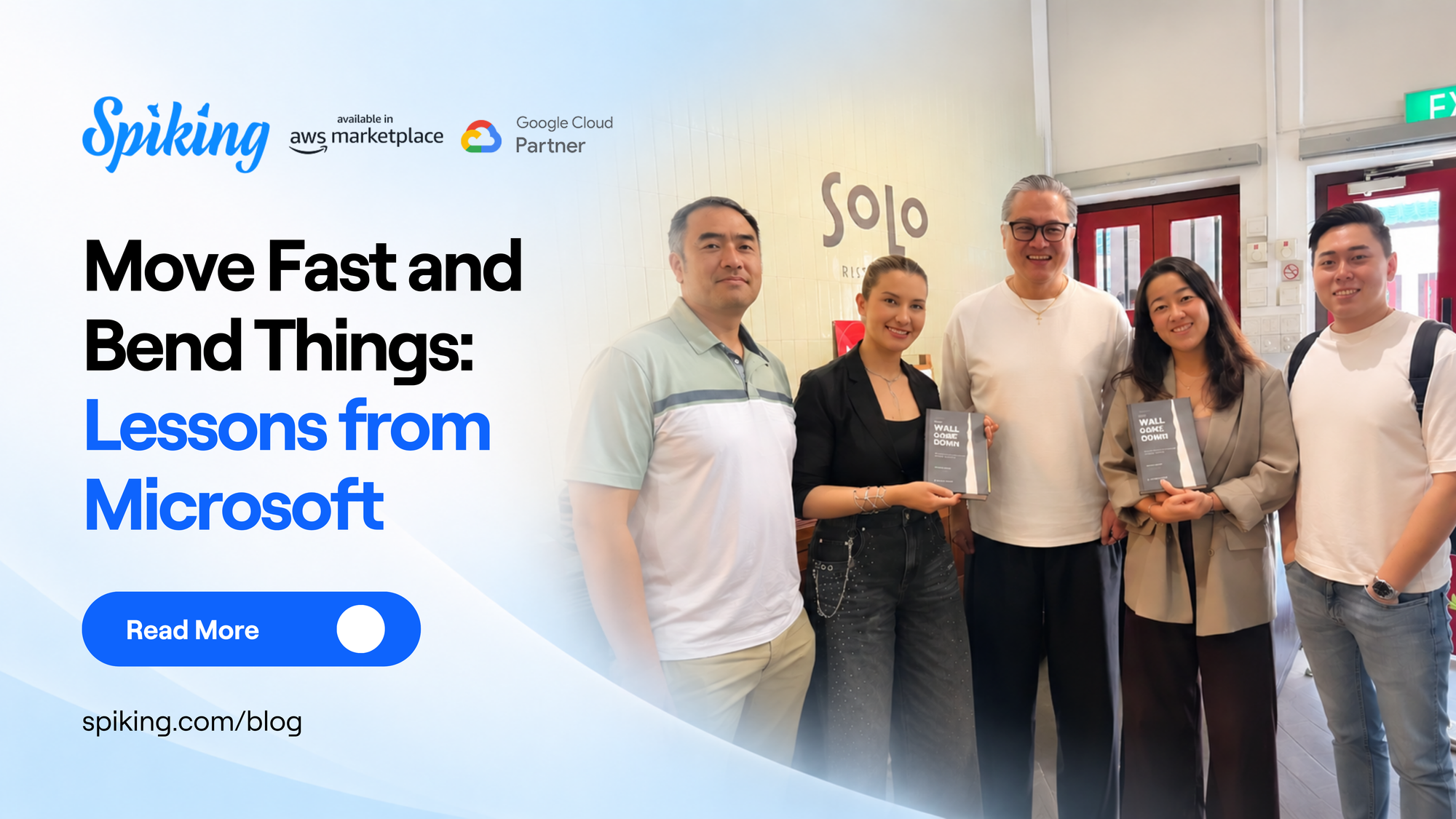
Dr. Clemen Chiang expected to meet one executive. Instead, Imane Jamal Eddine, GM & Head of Sales for Digital Natives, VCs & Startups at Microsoft Asia, brought three senior members of her team with her. There was no advance notice. None was needed.
Dr. Chiang deals directly with every one of the Magnificent Seven technology companies. He knows what a typical vendor lunch looks like: a presentation deck in a bag, a sales quota in the back of someone's mind, and a question about budget before the starters arrive.
But this lunch was different.
For two hours, four Microsoft executives asked about Spiking's workloads, customers, challenges, and what the company was actually trying to build. They took notes. They openly disagreed with one another during the conversation. Not one of them tried to sell anything.
Dr. Chiang left after signing two copies of his book for the team, carrying a perspective on Microsoft that he did not have when he arrived.
Move Fast and Bend Things
Silicon Valley's old motto was "move fast and break things." In today's AI industry, that approach can get someone fired, or worse, get their customer fired.
The better version is move fast and bend things. Not break. Bend.
Every customer in today's market is hustling. Everyone is chasing an AI model, a budget cycle, a launch date, or a board meeting. The technology vendors who succeed are not necessarily those offering the best prices. They are the ones whose people are willing to get things done within their company's rules, without waiting for those rules to catch up with the market.
Dr. Chiang is not suggesting that businesses should break rules. Compliance remains essential. The real difference lies between someone who says, "That's not how our process works," and someone who says, "The process doesn't cover this yet, so let me find who can decide."
Most large companies hire the first kind. The great ones promote the second.
What Dr. Clemen Chiang Learned
The world's leading technology companies are known for their products. That is already expected. What makes them stand out is the opportunity to meet the people behind those products and hear firsthand how they fight for their customers.
How they fight for small businesses that existing processes might otherwise filter out. How they fight to turn a competitor's customer into their own. How they challenge internal bureaucracy on behalf of their customers and find a way to succeed.
None of this is written into an organisational chart. It comes down to company culture, and that culture begins with the leadership of the team.
Four Microsoft executives attended the lunch. All four demonstrated the same customer-first mindset. That does not happen by accident. It happens because the person leading them genuinely lives by those values.
That is how successful businesses are built. Not simply by selling products, but by solving customers' problems and being willing to adapt the organisation to make it happen.
Doubling Down
Dr. Clemen Chiang has been a long-term investor in Microsoft. Following this lunch, he intends to add to his Microsoft investment position.
More importantly, he plans to double down as a Microsoft customer through Spiking.
Not because of a discount, and not because of a product roadmap. But because he has now met the people behind the company and understands what they are willing to do when the process says no.
Dr. Chiang extends his sincere thanks to Imane Jamal Eddine and the Microsoft Asia startup team for the insightful conversation and looks forward to building together.