
Bull vs Bear Market 2026: Scenarios Shaping the Global Market Outlook
Is the market turning bullish or preparing for a downturn? Explore the Bull vs Bear Market 2026 and what it means for your next move.

Table of Contents
Introduction
The Bull vs Bear Market 2026 narrative is shaping investor expectations, influencing how capital is allocated across global markets.
The real question is no longer: Is the market going up or down?
It is: Which scenario is being priced right now - bull or bear?
The conversation around this market cycle has become central to how investors interpret every move - from interest rates to AI-driven growth.
At Spiking, we analyse markets through data, capital flows, and institutional behaviour - not headlines.
What Defines the Global Market in 2026
AI Is Driving a New Capital Cycle
The global economy is entering a new phase led by artificial intelligence.
- Big Tech continues aggressive AI infrastructure spending
- Data centres, semiconductors, and energy demand are rising
- Productivity expectations are increasing across industries
This trend is a key driver in the Bull vs Bear Market 2026 outlook, particularly for growth sectors.
Interest Rates Still Control Liquidity
Despite optimism, liquidity remains constrained.
- Central banks are balancing inflation and economic growth
- Markets are anticipating rate cuts, but timing is uncertain
- Financial conditions remain tighter than previous cycles
Interest rates remain one of the most critical variables in the Bull vs Bear Market 2026 framework.
Geopolitics Is Reshaping Market Structure
Geopolitical tensions are now embedded into market dynamics.
- Energy supply risks continue to influence inflation
- Trade fragmentation is affecting global supply chains
- Governments are prioritising strategic industries
This adds complexity to both bull vs bear scenarios investing.
Bull vs Bear Market 2026: The Two Core Scenarios
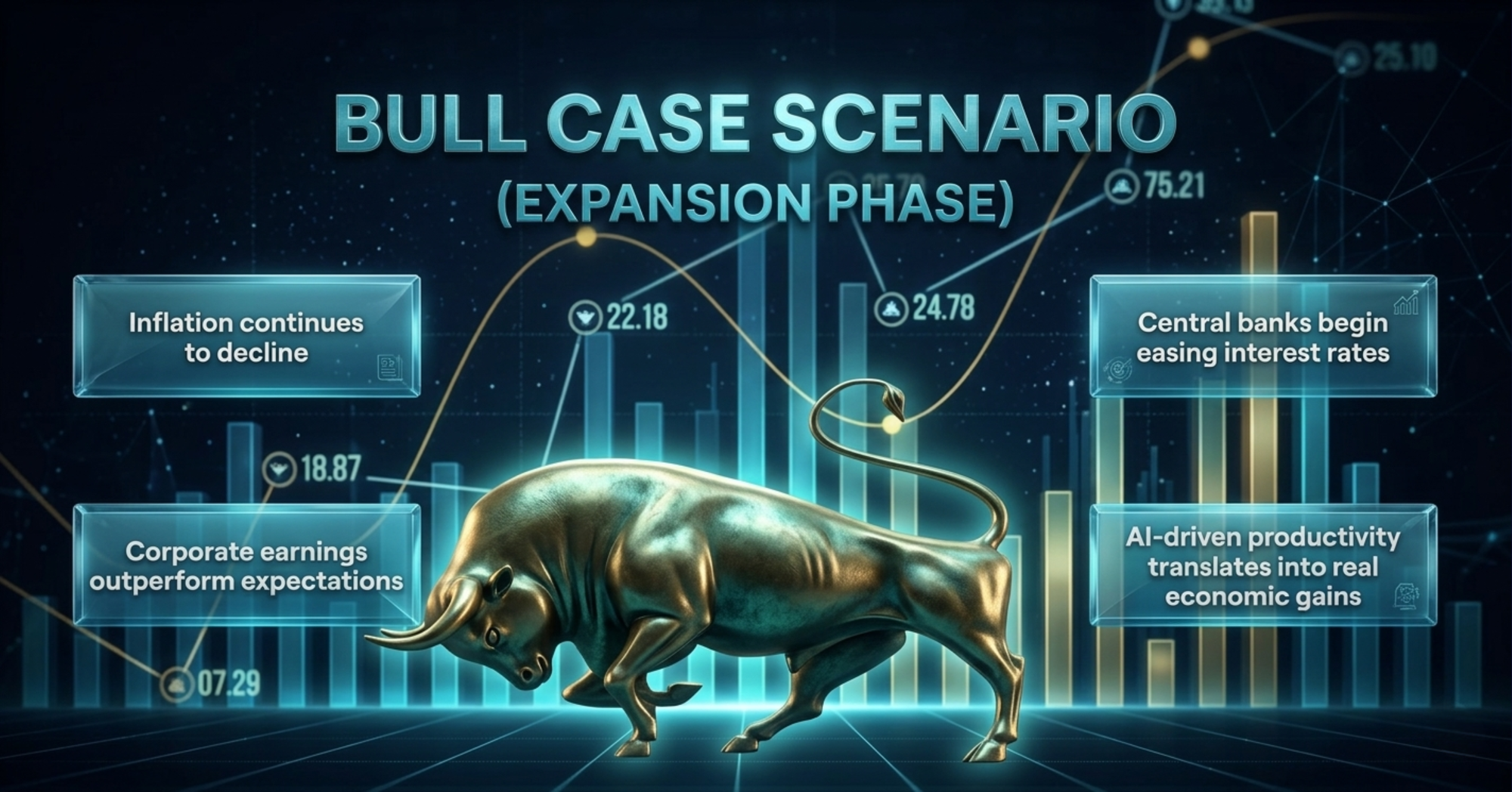
Bull Case Scenario (Expansion Phase)
The bull case unfolds if key macro conditions align:
- Inflation continues to decline
- Central banks begin easing interest rates
- Corporate earnings outperform expectations
- AI-driven productivity translates into real economic gains
Result:
- Equity markets move higher
- Growth sectors such as AI, semiconductors, and technology lead
- Risk appetite increases
In this scenario, the AI impact on the stock market becomes a dominant growth driver.
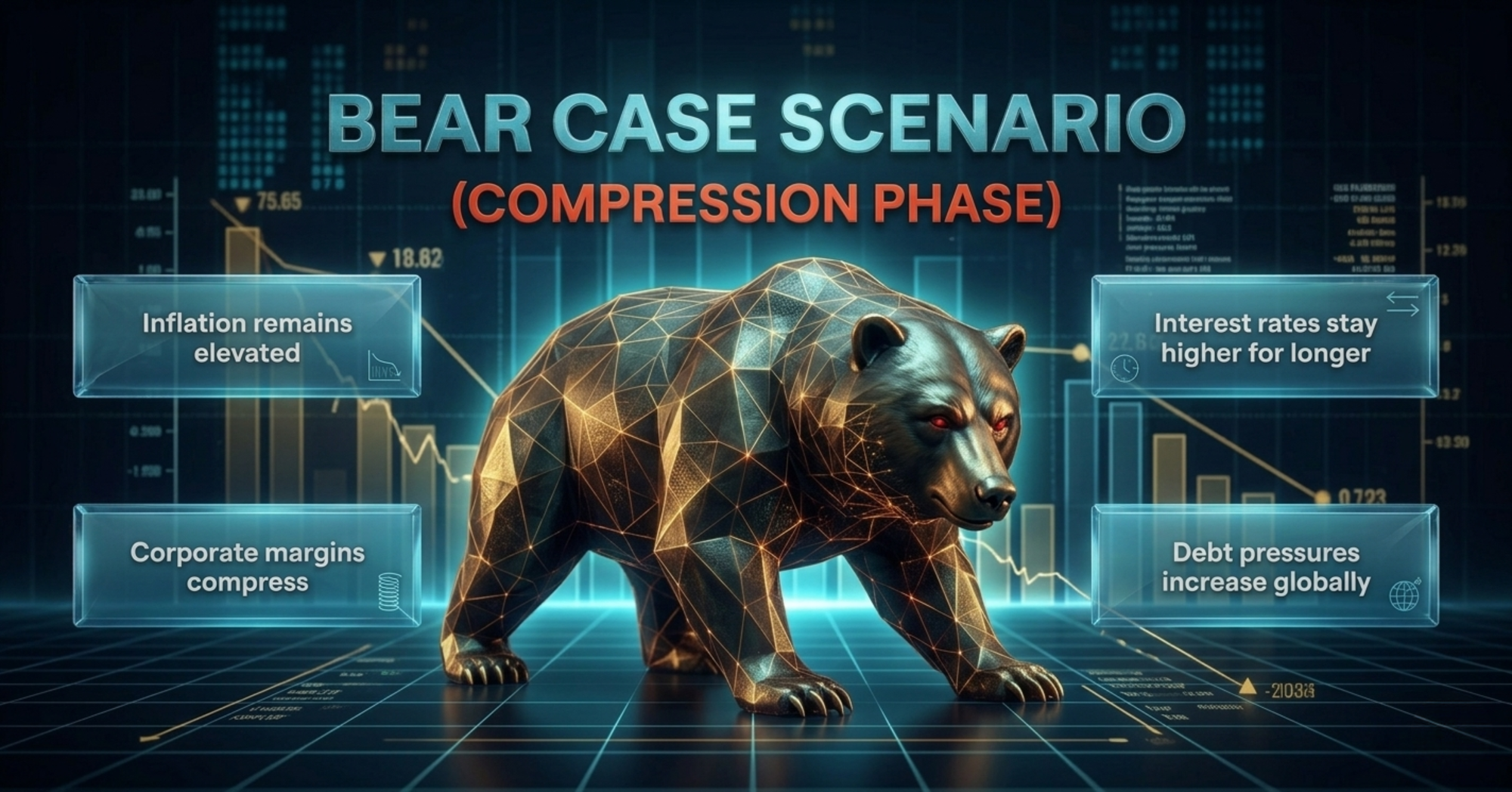
Bear Case Scenario (Compression Phase)
The bear case emerges if risks persist:
- Inflation remains elevated
- Interest rates stay higher for longer
- Corporate margins compress
- Debt pressures increase globally
Result:
- Markets correct or move sideways
- Defensive sectors outperform
- Volatility increases significantly
This represents the downside risk within the Bull vs Bear Market 2026 scenario analysis.
Markets Are Pricing Both Scenarios Simultaneously
A key reality in the global market outlook 2026:
Markets in 2026 are not purely bullish or bearish - they are driven by evolving scenarios and probabilities.
This means:
- Some sectors are in a bull phase (AI, infrastructure, energy)
- Others are in a bear phase (rate-sensitive sectors, highly leveraged companies)
Understanding this distinction is critical for navigating bull vs bear scenarios investing.
How Institutional Investors Are Positioning
Institutional investors are not making directional guesses.
They are:
- Tracking capital flows across sectors
- Positioning early into AI and infrastructure trends
- Hedging against macro risks such as inflation and interest rates
- Rotating capital dynamically based on probability
They operate based on data, not opinion.
What This Means for Investors
Most retail investors struggle because they:
- React to headlines
- Enter trades too late
- Lack a structured framework
In contrast, effective investors:
- Think in scenarios, not predictions
- Focus on capital flow rather than noise
- Adjust positioning based on changing probabilities
This is the difference between reacting and executing.
Conclusion
The Bull vs Bear Market 2026 is not about taking sides but about understanding how markets continuously shift between competing scenarios based on data, liquidity, and institutional behaviour.
As capital rotates across sectors and macro conditions evolve, investors who rely on rigid views often fall behind.
The real advantage comes from recognising which scenario is gaining dominance at any given moment and positioning accordingly. Those who develop this level of clarity move beyond reacting to market noise and instead execute with precision, aligning themselves with how markets truly operate.
Track real-time market signals with Spiking: https://spiking.com/